“Understand” before “Design”
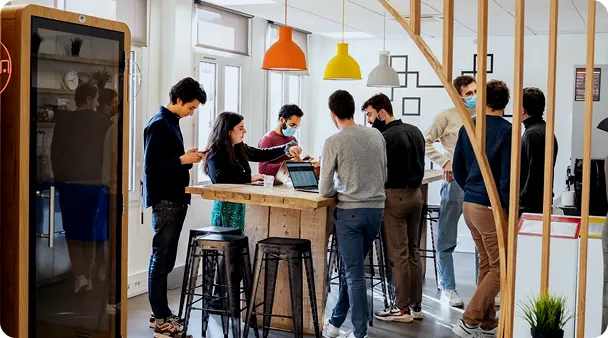
Immersion is an essential step. The goal is not to validate intuitions, but to understand the reality on the ground. Observing interactions between agents and citizens, as well as the hardware and software systems at the heart of their exchanges, allows us to grasp the contexts of use, actual practices, and operational constraints linked to the activities of a sovereign public service operated by a state ministerial agency.
This observation phase, supplemented by interviews with agents, reveals pain points that are sometimes invisible simply because they are part of daily life. It establishes a solid factual foundation, which is necessary to understand a complex system and identify genuine levers for improvement.
Projecting a clear and unifying vision
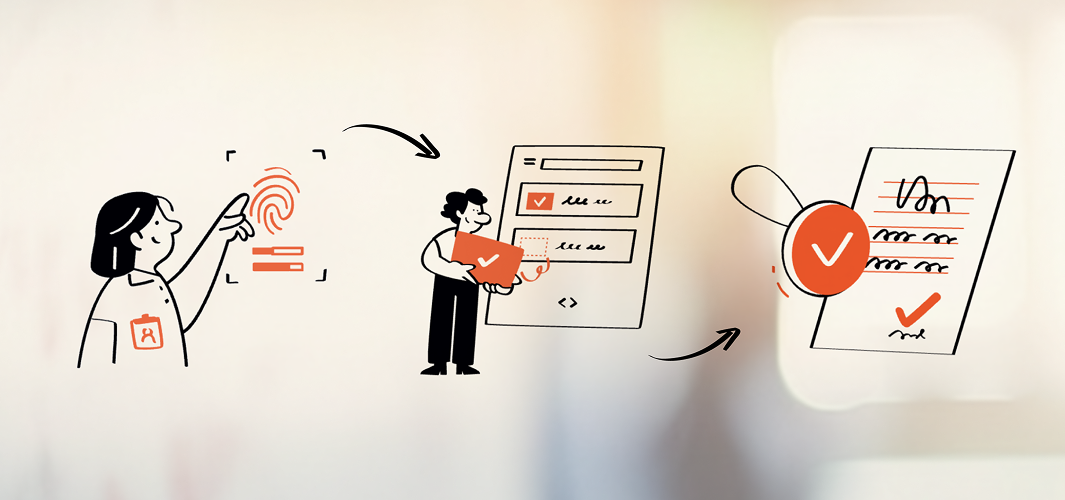
The User Journey helps structure these insights and visualize the experience as a whole. This mapping highlights friction points, interactions between different stakeholders, and the role played by tools at each stage.
As a genuine tool for discussion, it allows us to identify opportunities, share a common understanding of the existing system, and confront operational challenges with the reality on the ground. These exchanges lay the foundations for a concept and a vision, built collectively from concrete issues.
But a vision only has an impact if it is supported by everyone. The Experience Map helps to share a vision with teams; it is a communication tool that makes sometimes abstract concepts tangible and fuels discussion. This visual aid plays a key role in aligning stakeholders around a common trajectory.
Taking a step back from the entire experience is a key lever for initiating the modernization of tools and moving beyond an approach focused solely on equipment.
Our approach
We design experiences and products based on real-world usage to build sustainable solutions that are aligned with the reality on the ground.

Immersion
Observing actual practices to guide design.

Perspective
Analyzing the end-to-end experience to take action where it matters most.

Vision
Uniting stakeholders around a clear and desirable vision.

Résultats :
Fluidity
Efficiency
Sustainability
This project illustrates how experience design can serve as a strategic lever in constrained environments: not by imposing a radical break, but by supporting a gradual, realistic, and shared transformation. By placing the field, user habits, and clarity at the heart of the process, it becomes possible to evolve complex systems while ensuring long-term buy-in from stakeholders.